
Strategic school management is not a collection of one-off initiatives. It is a disciplined cycle — leadership sets direction, culture supports change, planning turns vision into priorities, execution translates priorities into daily practice, and continuous improvement keeps the whole system honest.
Each of the eight dimensions answers a specific leadership question. Taken together, they define what strategic excellence looks like in a modern school district.
Each dimension includes a core focus, the leadership question it answers, and the five resource tools that support it.
Perry’s framework is deliberately parallel. For each of the eight dimensions we provide the same five types of tools, each answering one clear question about your current state and your next move.
Leaders set direction and keep the organization focused. Strategy lives or dies on whether those at the top own it, manage it, and drive it.
Stakeholders build a culture of success and a willingness to grow and change. Strategy requires the trust, communication, and engagement that makes change possible.
Stakeholders are always thinking about the future and moving toward it through decisions and a clear plan — one that turns a long-range vision into focused action.
Everything supports the mission, vision, core values, goals, and strategies of the strategic plan — from the budget to the master schedule to the professional learning calendar.
Everyone knows the impact of their work. Stakeholders understand what is working and what is not through transparent data and clear communication.
Everyone feels resources are allocated and used well, and the right projects are managed and supported well — from kickoff through completion and sustainability.
Improving how work gets done. Everyone works hard to ensure consistency, remove barriers, eliminate defects, and reduce variation across classrooms, schools, and departments.
Making improvements last over time. Everyone accepts responsibility and accountability for strategy — and for the students, staff, and resources in their care.
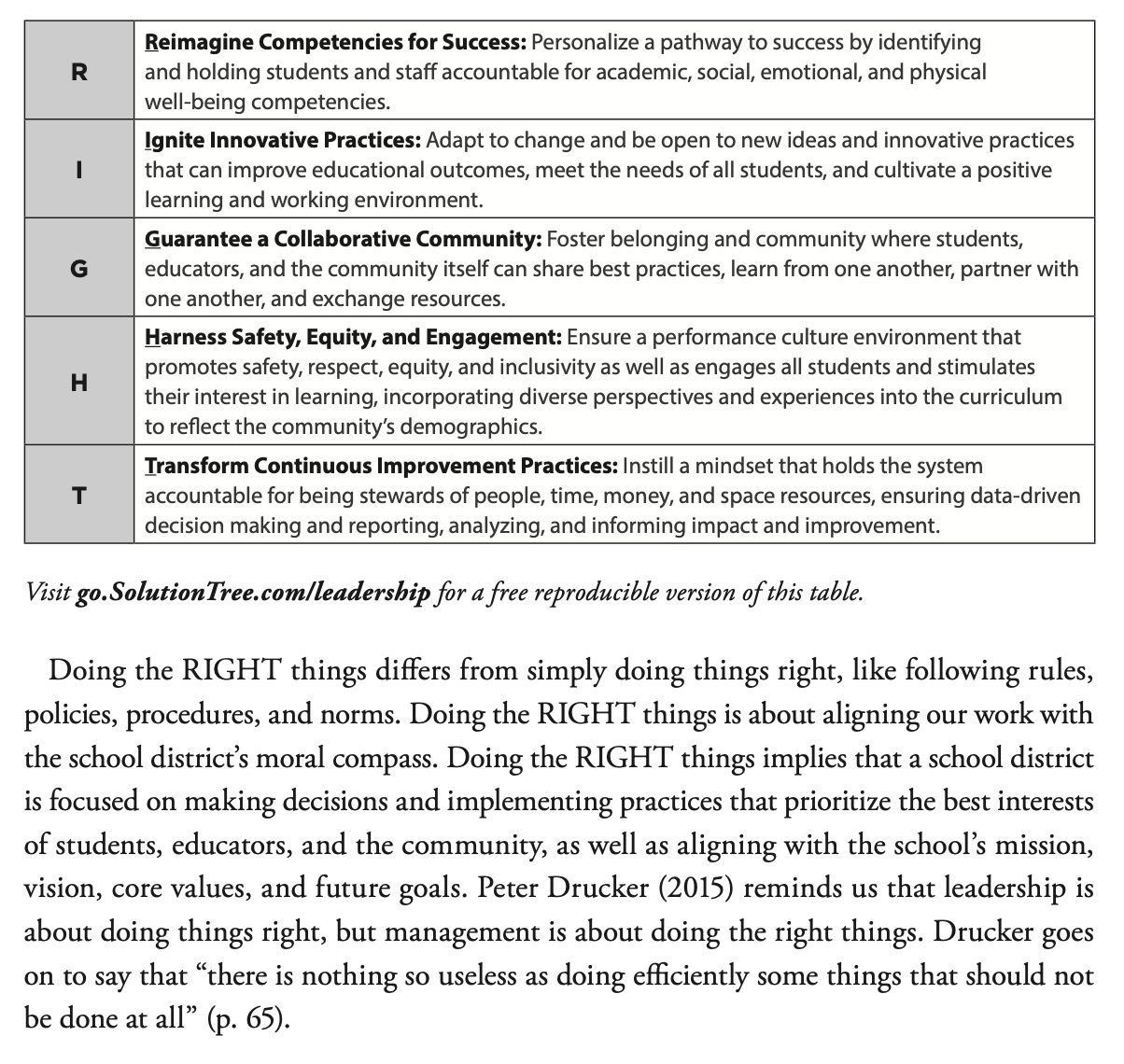
Doing the RIGHT things differs from doing things right. It is about aligning our work with the school district’s moral compass and the real interests and experiences of students, staff, community, and families.
The full framework — including assessment rubrics, tools, and district stories — is available in Perry’s forthcoming book from Solution Tree.